Find Bluetooth Sport Smart Watch for Fitness, Health, and Communication
Source 30 Bluetooth Sport Smart Watch models from verified suppliers. Compare features like AMOLED displays, battery life, and water resistance across various models including YS15PLUS and K21 for fitness, health monitoring, and communication needs.
Key considerations
Products List


Fashion Sport Smart Watch Waterproof Heart Rate Blood Oxygen Smart Watches
$1.00 - $6.70
MOQ: 1000 Pieces


New Smart Couple Watches Digital Watch Touch Screen Bluetooth Sport Smartwatch
$13.24 - $13.54
MOQ: 100 Pieces


Smart Watch with Blood Pressure and Heart Rate Sport Fitness Control Bracelet
$11.53 - $11.93
MOQ: 100 Pieces

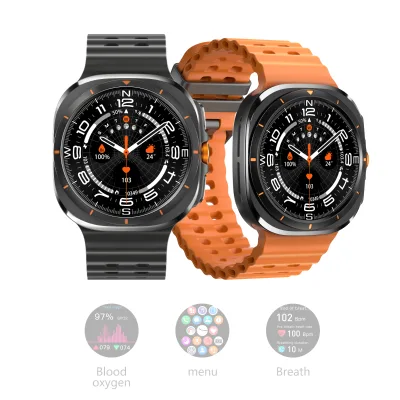


Step Counting Sleep Heart Rate Blood Oxygen Bluetooth Smart Sports Watch
$19.11 - $21.23
MOQ: 50 Pieces

Bluetooth Call Heart Rate, Blood Oxygen, Sleep Music Sports, Smart Watch
$14.12 - $15.69
MOQ: 50 Pieces

Smart Bluetooth Watch Step Counting Heart Rate Monitoring Sports Bracelet
$13.71 - $15.23
MOQ: 50 Pieces


Comprehensive Sourcing Guide
Strategic Sourcing Guide for Bluetooth Sport Smart Watches
The global market for wearable technology has evolved significantly, with Bluetooth sport smart watches emerging as a critical segment for both consumer fitness enthusiasts and corporate wellness programs. For B2B procurement professionals, navigating this sector requires a disciplined approach that separates marketing assertions from verifiable product attributes. The following guide synthesizes available market data to provide a framework for sourcing these devices, focusing on technical specifications, material integrity, and supply chain reliability without relying on unverified claims or specific supplier recommendations.
Technical Architecture and Display Specifications
When evaluating Bluetooth sport smart watches, the first layer of analysis must focus on the core hardware architecture. The display technology is a primary differentiator in this category. Current market observations indicate a prevalence of AMOLED (Active-Matrix Organic Light-Emitting Diode) displays, which offer superior contrast ratios and energy efficiency compared to traditional LCD panels. This is particularly relevant for sport applications where outdoor visibility and battery longevity are paramount.
Screen dimensions vary significantly across product lines, ranging from compact 1.83-inch units to larger 2.01-inch and 2.1-inch variants. The resolution metrics are equally diverse, with observed specifications including 240x284 pixels, 240x296 pixels, and higher-density configurations such as 368x448 pixels. Buyers must verify that the resolution matches the intended use case; higher resolutions are essential for detailed health data visualization, while lower resolutions may suffice for basic timekeeping and step counting.
Connectivity is a non-negotiable feature for the "Bluetooth" designation in the core keyword. The product data confirms the integration of Bluetooth modules, often paired with WiFi capabilities in advanced models. This dual connectivity allows for seamless synchronization with mobile applications, such as the Hryfine app observed in specific listings, enabling real-time data transfer and remote control. Furthermore, the presence of full-screen touch interfaces is standard, enhancing user interaction during high-movement activities.
Material Composition and Physical Durability
The physical construction of a sport smart watch dictates its durability and comfort during extended wear. Material selection is a critical factor in the procurement decision. The supply chain data highlights the use of silicone for bands, a material chosen for its flexibility, hypoallergenic properties, and resistance to sweat and moisture. This makes silicone an ideal choice for athletic applications where hygiene and comfort are frequent concerns.
For the watch casing or shell, Zinc Alloy is a documented material option. This metal alloy provides a robust structural framework that protects internal electronics from impact while maintaining a premium aesthetic. The weight of these devices is a significant ergonomic consideration; observed product weights range from approximately 46.1 grams to 70.7 grams. Lighter units are generally preferred for intensive sports, whereas heavier units may offer more substantial battery capacity or additional sensor hardware.
Water resistance is a mandatory specification for sport-oriented devices. While specific IP ratings vary, the data indicates the presence of "Water Resistant" and "IP65" classifications in the market. An IP65 rating suggests protection against low-pressure water jets from any direction, suitable for rain and sweat, though it may not be sufficient for deep-water swimming. Procurement teams must verify the exact IP rating for specific models to ensure they meet the environmental demands of the target user base.
Power Management and Battery Performance
Battery capacity and life are central to the functionality of any wearable device. The market presents a wide spectrum of battery solutions, ranging from compact 180mAh units to larger 680mAh configurations. The disparity in capacity often correlates with screen size and feature set; devices with larger AMOLED displays and dual connectivity (Bluetooth and WiFi) typically require higher capacity batteries to maintain operational viability.
Observed battery life metrics indicate a standby time of up to 30 days for certain models, while active usage typically yields a battery life of 2-3 days. This variance underscores the importance of defining the usage profile during the sourcing process. A device intended for continuous health monitoring will drain power faster than one used primarily for notifications and timekeeping. The memory configurations, observed as 2+16GB, 3+32GB, or 4+64GB, also play a role in power consumption, as larger storage allows for more local data caching, potentially reducing the frequency of wireless data transmission.
Functional Capabilities and Health Integration
The functional scope of Bluetooth sport smart watches extends beyond simple timekeeping. The product data confirms the inclusion of health monitoring functions, with specific support for heart rate tracking. This capability is essential for athletes and fitness-conscious consumers who require real-time physiological data. The integration of these sensors is often paired with "Detection" usage attributes, suggesting the device can identify specific activity states or anomalies.
Camera integration is another observed feature, with some models equipped with 200W (likely 2-megapixel) cameras. While this feature is less common in traditional sport watches, it expands the device's utility for video calls or quick documentation during activities. The language support is noted as "Multi-Language," which is a crucial consideration for international distribution, ensuring the device can be marketed and used in diverse geographic regions without localization barriers.
Packaging, Standards, and Origin Verification
Logistical and compliance factors are often overlooked until the final stages of procurement, yet they significantly impact the total cost of ownership. The product data indicates that packaging varies between "Gift Box" and "Bubble Bag" configurations. Gift box packaging suggests a premium positioning, suitable for retail or corporate gifting, while bubble bag packaging is more indicative of bulk wholesale or B2B distribution where cost efficiency is prioritized.
Standardization in this sector is complex. The data references specific dimensional standards, such as 44.537.811.7 mm and 50.0843.7516 mm, which likely refer to the physical footprint of the device. However, some entries list "NA" for standards, indicating a lack of universal compliance documentation for certain models. Buyers must verify that the product origin, consistently listed as China, aligns with their import regulations and that the specific manufacturing standards meet the destination country's safety requirements.
Supplier Evaluation and Quality Assurance
Evaluating suppliers for Bluetooth sport smart watches requires a rigorous due diligence process. The market shows a high degree of customization availability, allowing buyers to tailor products to specific branding or functional needs. However, the presence of multiple product names—such as "Smart Watch," "Smart Watch Bracelet," "Watch," and "Wrist Smart Watch"—indicates a fragmented market where branding can be inconsistent. Procurement teams must ensure that the supplier can provide consistent quality across these different product lines.
Quality control should focus on the verification of the observed specifications. For instance, confirming that the battery capacity matches the stated 680mAh or 180mAh is essential to prevent performance discrepancies. Similarly, the touch responsiveness and screen resolution must be validated through sample testing. The use of Zinc Alloy and Silicone should be verified through material analysis to ensure they meet durability and safety standards.
Cost Drivers and Procurement Strategy
The pricing landscape for these devices is highly variable, with observed ranges spanning from $1 to $42 USD. This wide disparity is driven by several factors, including the complexity of the chipset, the quality of the display, the battery capacity, and the level of customization. The Minimum Order Quantity (MOQ) also varies significantly, ranging from 1 unit to 1000 units. This flexibility allows buyers to test the market with small orders before committing to large-scale production runs.
Lead times and shipping costs are additional cost drivers that must be factored into the total procurement budget. While specific lead times are not provided in the data, the origin in China suggests that international shipping logistics will play a significant role. Buyers should anticipate potential delays related to customs clearance and freight availability. The choice between Gift Box and Bubble Bag packaging will also impact the final unit cost, with premium packaging adding to the overall expense.
Long-Term Procurement Considerations
Sourcing Bluetooth sport smart watches is not merely a transactional activity but a strategic partnership that requires long-term planning. The rapid evolution of technology means that devices with current specifications, such as 2+16GB memory or specific IP ratings, may become obsolete quickly. Buyers should prioritize suppliers who demonstrate a commitment to continuous improvement and who can provide firmware updates to extend the device's lifecycle.
Furthermore, the customization capabilities observed in the market offer a pathway for brand differentiation. By leveraging the available customization options, buyers can create unique products that stand out in a crowded marketplace. However, this requires careful management of the supply chain to ensure that custom components do not introduce delays or quality issues.
In conclusion, the Bluetooth Sport Smart Watch market offers a diverse array of options for B2B buyers. By focusing on verified technical specifications, material integrity, and supplier reliability, procurement professionals can navigate this complex landscape effectively. The key to success lies in rigorous due diligence, clear definition of requirements, and a strategic approach to cost and quality management. As the market continues to evolve, maintaining a disciplined, evidence-based sourcing strategy will remain the most effective method for securing high-quality wearable technology.
FAQs
What display technology is used in these smart watches?
The devices utilize AMOLED display technology for superior contrast and energy efficiency. This screen type supports high-resolution configurations like 368x448 pixels, ensuring clear visibility during outdoor sports activities and extended usage.
Which battery capacities are available for these models?
Battery capacity ranges from 180mAh to 680mAh depending on the specific model and feature set. Larger capacities typically support advanced connectivity and larger screens, offering standby times up to 30 days for certain configurations.
Can these watches be customized for branding purposes?
Yes, customization is available for these smart watch products to meet specific branding needs. Buyers can leverage this option to tailor the device appearance or functionality, though lead times may vary based on the complexity of the request.
What materials are used for the watch band and shell?
The bands are made of flexible silicone, while the shell often uses Zinc Alloy for durability. This combination ensures comfort during wear and protection for internal electronics against impact and moisture in athletic environments.
How much do these smart watches cost per unit?
The observed price range spans from 1 to 42 USD depending on specifications and order volume. Costs vary significantly based on features like screen size, memory capacity, and whether premium gift box packaging is selected.
What is the minimum order quantity for these devices?
The minimum order quantity ranges from 1 to 1000 units depending on the supplier and product configuration. This flexibility allows buyers to test the market with small orders before committing to larger production runs.
Which health functions are supported by these watches?
These devices support health monitoring functions including heart rate tracking and activity detection. The integration of sensors allows for real-time physiological data collection, which is essential for fitness enthusiasts and corporate wellness programs.